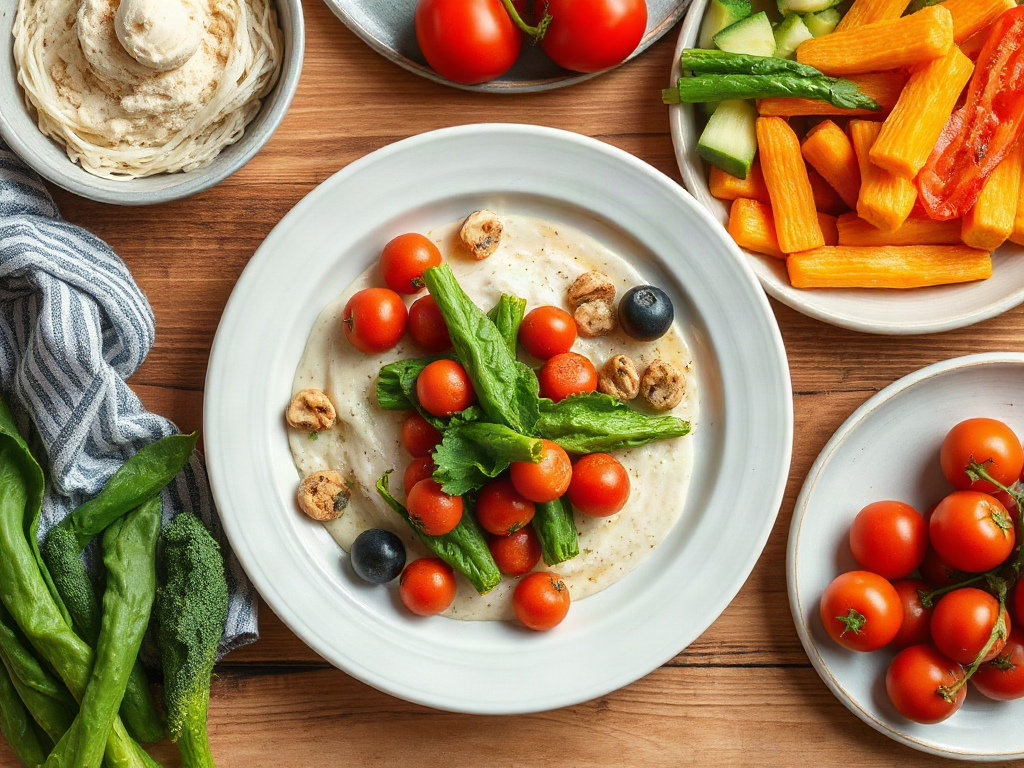
Vegetable focused meals for reducing ultra processed foods work best when vegetables anchor a complete plate with protein, fiber-rich carbohydrates, and flavorful fats rather than replacing every convenience food at once. Build meals around roasted, sautéed, steamed, or raw vegetables, then add beans, eggs, fish, tofu, whole grains, potatoes, nuts, or yogurt to improve fullness and flexibility. Batch-cooked ingredients make homemade meals easier to choose when time is limited, while sauces made from herbs, citrus, tahini, or plain yogurt can replace heavily formulated flavor products. A common mistake is serving vegetables alone, which may leave you hungry and make packaged snacks more appealing. Gradual substitutions are often more sustainable than strict elimination.
Build a Satisfying Plate Around Vegetables
Vegetable-focused eating becomes more practical when vegetables provide the volume, color, and texture of a meal while other minimally processed foods supply energy and staying power. A bowl of plain lettuce may technically contain vegetables, but it is unlikely to replace a frozen entrée or packaged snack if it leaves you hungry an hour later. A more useful structure combines roughly half the plate with vegetables, then adds a protein source, a carbohydrate that fits the meal, and a modest amount of fat or sauce.
Protein can come from lentils, beans, tofu, eggs, chicken, fish, or plain dairy. Carbohydrates might include potatoes, brown rice, oats, corn, or whole-grain pasta. These additions do not undermine the goal of reducing ultra processed foods; they make the meal substantial enough to compete with the convenience and palatability of packaged products. For example, roasted broccoli and peppers become a complete dinner when paired with chickpeas, quinoa, and a lemon-tahini dressing.
Fiber, water, and food volume help explain why vegetables can make meals feel more substantial, but fullness varies with portion size, cooking method, individual appetite, and the rest of the plate. Raw vegetables offer crunch and freshness, while cooked vegetables are often easier to eat in larger amounts and may suit people with limited chewing tolerance. Neither form is automatically better.
A useful check is to ask whether the meal contains enough protein and whether it would remain appealing without a packaged topping. If the answer is no, add a boiled egg, beans, edamame, leftover chicken, or a simple homemade sauce instead of merely increasing the salad leaves. The related planning principles in vegetable focused meals for reducing ultra processed foods are most effective when they account for hunger, schedule, and cooking capacity.
Meal Ideas That Replace Packaged Convenience Foods
The strongest substitutions resemble the meals people already want to eat. Replacing a frozen pasta dish with plain steamed vegetables may fail because it removes flavor, calories, and convenience all at once. Replacing it with a skillet of zucchini, mushrooms, white beans, tomato, garlic, and whole-grain pasta preserves the basic experience while reducing reliance on a ready-made product.
Breakfast can shift from sweetened packaged items to combinations such as eggs with spinach and potatoes, savory oats with mushrooms and a poached egg, or plain yogurt with cucumber, herbs, and whole-grain toast. These meals differ in texture and preparation time, so the best choice depends on whether the morning allows cooking. A batch of roasted vegetables can make an egg-and-vegetable wrap quick, although a simple homemade bowl may be preferable when avoiding heavily formulated tortillas or sauces.
For lunch, try a vegetable and bean grain bowl, lentil soup with carrots and cabbage, or a baked potato topped with broccoli, plain yogurt, and black beans. Dinner options include stuffed peppers with rice and lentils, sheet-pan cauliflower with salmon, or cabbage stir-fry with tofu and brown rice. Frozen plain vegetables can be useful here; freezing is not the same as ultra processing, and unsalted frozen produce may be more practical than buying only fresh items.
Snacks need similar attention. Cut carrots with hummus, roasted chickpeas, fruit with nuts, or cucumber with cottage cheese can replace some packaged snack occasions. Hummus, bread, canned beans, and yogurt may still involve processing, but the ingredient list and degree of formulation matter. The goal is not to classify every prepared item as harmful; it is to reduce dependence on products designed to be eaten quickly and repeatedly.
Flavor, Protein, and Preparation Constraints
Flavor determines whether vegetable-centered meals become regular meals or occasional experiments. Browning from roasting, caramelization in a hot skillet, fresh herbs, toasted spices, citrus, vinegar, and savory ingredients such as garlic or mushrooms can make vegetables taste complete rather than corrective. A tray of bland steamed vegetables will usually compare poorly with a packaged meal that has been engineered for strong salt, fat, sweetness, and aroma.
Homemade sauces provide a useful middle ground. Tahini with lemon and water, plain yogurt with dill, blended white beans with garlic, or a tomato sauce made from canned tomatoes can add moisture and character. Salt still deserves attention, especially when combining canned beans, cheese, broth, or condiments. Rinsing canned beans and tasting before adding more salt can prevent a meal from becoming excessively salty without requiring a rigid low-sodium rule.
Protein is another frequent weak point. A vegetable-only bowl may look generous but fail to replace the staying power of a packaged meal containing refined starch, oil, and protein. Add a deliberate protein portion rather than hoping vegetables will cover that role. Lentils and tofu work well in batch cooking; eggs are fast; canned fish is convenient; plain Greek-style yogurt can serve as a topping. People with allergies, digestive conditions, kidney disease, or specific dietary needs may need individualized advice about suitable amounts and choices.
Time and equipment also shape the best method. A sheet pan and rice cooker can support several meals, while a person without an oven may rely on a skillet, microwave, or no-cook combinations. Fresh produce may spoil before it is used, so frozen vegetables, long-lasting cabbage, carrots, onions, and potatoes can reduce waste. A common mistake is buying ambitious ingredients for several recipes, then returning to packaged food when preparation becomes complicated. Two dependable meal formulas are more valuable than a week of elaborate plans.
A Practical Transition Plan and Common Mistakes
Reducing ultra processed foods works more smoothly as a series of substitutions than as an immediate ban. Begin with the eating occasion that feels easiest to change. If lunch is usually a packaged meal, prepare one vegetable-and-protein bowl twice a week. If evening snacking is the main issue, make a ready-to-eat vegetable option and pair it with something satisfying instead of leaving cut produce alone in the refrigerator.
Use a short preparation cycle: choose two vegetables, one protein, one starch, and one sauce for the next few days. Roast or cook the vegetables, prepare the protein, and store components separately when textures matter. Keeping cabbage or peppers separate from rice can prevent sogginess, while dressing a grain bowl just before eating preserves freshness. Labeling leftovers with the preparation date can also make the safest choice visible when the refrigerator is crowded.
Signs the approach is working include fewer emergency food decisions, meals that keep you satisfied until the next planned eating occasion, and less waste from unused produce. Signs it needs adjustment include persistent hunger, repeated evening cravings, meals that take too long, or vegetables spoiling before use. Those signals do not mean the concept failed; they usually indicate that portions, protein, flavor, or scheduling need revision.
Prioritize the following sequence rather than trying to perfect everything at once:
- Replace one recurring packaged meal with a complete vegetable-centered version.
- Add a reliable protein and carbohydrate instead of serving vegetables by themselves.
- Prepare one sauce or seasoning blend that makes leftovers appealing.
- Keep frozen or shelf-stable ingredients available for busy days.
- Review hunger, cost, preparation time, and food waste after several meals.
Strict rules can create an unnecessary divide between homemade and packaged food. A jar of pasta sauce, frozen plain vegetables, canned beans, or whole-grain bread may support the broader goal even though it is not entirely unprocessed. The more useful question is whether the item helps create a balanced meal with a manageable ingredient list and a realistic role in your routine. Vegetable-focused meal planning should reduce dependence on ultra processed foods without making eating so demanding that convenience becomes the only workable option.
Frequently Asked Questions
Do vegetable-focused meals have to be vegetarian?
No. Vegetables can anchor meals that include eggs, fish, poultry, dairy, or meat. The focus is the meal's composition, not eliminating a particular food group.
Are frozen vegetables suitable for reducing ultra processed foods?
Plain frozen vegetables are a practical choice because they are convenient and usually contain little beyond the vegetable itself. Check flavored versions for added sauces, salt, or other ingredients.
How can I stay full after eating more vegetables?
Pair vegetables with a clear protein source, a satisfying carbohydrate, and some fat. Beans with potatoes and roasted vegetables will generally be more sustaining than vegetables alone.
What is an easy first meal to change?
Choose the meal you repeat most often and build a simple replacement around one cooked vegetable, one protein, one starch, and a sauce. Repetition makes preparation easier.
Do I need to avoid every packaged food?
No. Plain frozen produce, canned beans, yogurt, whole-grain bread, and other convenient staples can fit a less ultra-processed pattern. Consider the ingredient list, role, and frequency of the item.
Conclusion
Successful vegetable-focused meals are complete meals, not plates of vegetables waiting for discipline to make them appealing. Build around roasted, sautéed, steamed, or raw vegetables, then add protein, a useful carbohydrate, and a flavorful sauce. Keep the method compatible with your equipment, budget, schedule, and storage space; frozen vegetables and canned beans can be sensible tools rather than compromises. Start with one recurring packaged meal, monitor hunger and preparation time, and adjust the recipe when it fails in real life. Reducing ultra processed foods does not require rejecting every convenient ingredient. It requires creating enough reliable, satisfying alternatives that packaged meals become an occasional choice rather than the default.