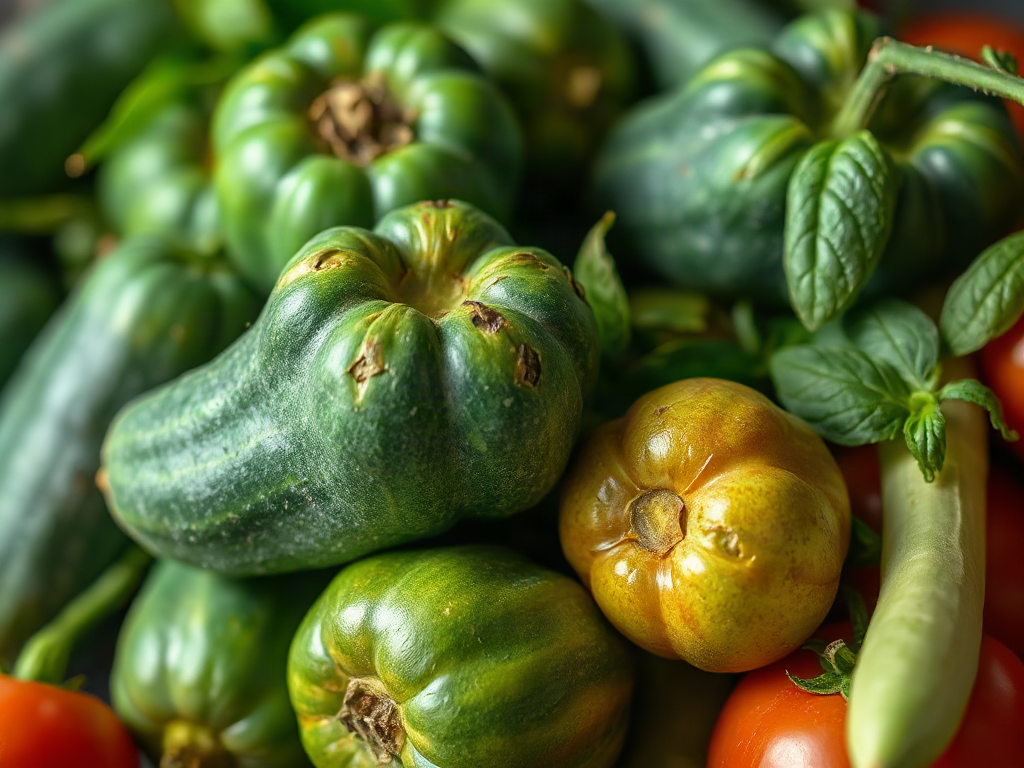
Vegetables affected by refrigerator cold injury are usually chilling-sensitive crops such as cucumbers, eggplant, peppers, tomatoes, basil, and some beans that develop pitting, water-soaked areas, surface discoloration, poor flavor, or faster decay after prolonged exposure to overly cold conditions. The damage results from cold stress rather than freezing alone, so produce may look intact when removed but deteriorate during the next few days. Check for sunken spots, translucent flesh, softening, and unusual browning before deciding how to use it. Move sensitive vegetables to a warmer, stable location, avoid storing them beside the cold-air outlet, and use damaged items promptly if there is no mold or off odor.
What Refrigerator Cold Injury Looks Like
Refrigerator cold injury is a physiological response that occurs when a vegetable remains below its preferred storage temperature without necessarily freezing solid. The tissues become stressed, membranes lose function, and the damage may appear as small pits, translucent patches, water-soaked flesh, or uneven browning. Affected vegetables may still feel firm immediately after removal, which makes the problem easy to mistake for ordinary aging.
The timing of symptoms matters. A cucumber can emerge from a cold refrigerator with a normal green exterior, then develop soft, sunken areas after sitting at room temperature. Eggplant may show bronze or brown surface patches, while peppers can develop pitting around the stem or along the sides. These changes do not automatically mean the vegetable is unsafe, but they do indicate reduced quality and a higher chance of decay.
Cold injury differs from freezing injury. Frozen tissue often becomes limp, watery, and translucent as ice crystals rupture cells. Chilling injury can develop at temperatures above the freezing point and may be patchy rather than total. The same refrigerator can leave carrots and cabbage in good condition while damaging cucumbers or basil because each crop has a different temperature tolerance.
Use the vegetables affected by refrigerator cold injury link as a reminder to judge produce by both appearance and condition. A dry surface blemish on a firm pepper calls for different handling than spreading slime, fuzzy mold, or a sour odor. Quality loss can be trimmed or cooked around in some firm vegetables; active spoilage should not be rescued by cutting.
Vegetables Most Vulnerable to Chilling Damage
Warm-season vegetables generally face the greatest risk because their tissues evolved for conditions warmer than a typical refrigerator. Cucumbers, eggplant, peppers, summer squash, okra, and immature beans are common examples. Tomatoes also lose quality when kept too cold: their flavor and aroma can fade, and the flesh may develop a mealy texture. Fresh basil is especially delicate and may turn dark or limp after cold exposure.
Not every part of a vegetable responds equally. The stem end, cut surface, and areas with minor bruising often show damage first because those tissues lose moisture or exchange gases more readily. A whole pepper may remain usable while its stem cavity becomes soft. A trimmed squash may deteriorate faster than an intact one because cutting removes the protective outer barrier.
Cold-tolerant crops include many leafy greens, root vegetables, brassicas, and storage onions, although their performance still depends on moisture and temperature stability. Lettuce, broccoli, carrots, and radishes usually benefit from cool storage, but they can suffer freezing injury if placed against a very cold wall or exposed to a strong vent. Tolerance is a range, not a guarantee.
A useful comparison is between a cucumber and a carrot. The carrot is adapted to cool conditions and generally maintains texture in the refrigerator, whereas the cucumber may develop pitting and watery flesh after prolonged exposure. Treating every vegetable as if it belongs in the same drawer is a common mistake. Consult crop-specific storage guidance when the item is expensive, unusually delicate, or intended for several days of fresh eating.
Temperature is only part of the equation. Exposure length, airflow, humidity, maturity, previous bruising, and whether the vegetable was cut all influence the result. A firm, mature pepper may tolerate an uneven refrigerator better than a young, bruised one. That variability explains why one package can contain both healthy pieces and chilled, deteriorating pieces.
Why Cold Injury Happens in a Refrigerator
Cold injury begins when low temperatures disrupt normal cell activity. Cell membranes become less flexible, water movement changes, and tissues lose the ability to maintain their usual structure. When the vegetable warms again, damaged cells may leak moisture, creating translucent or water-soaked areas. Those weakened areas are also more vulnerable to bacteria and fungi already present on the surface.
Refrigerator design creates uneven conditions. Air near the rear wall, cooling plate, or circulating vent can be much colder than the average setting shown on the control panel. A container placed directly in that airflow may chill faster than produce stored in the middle of a drawer. Frequent door opening produces temperature swings, while an overloaded drawer can restrict air movement and trap moisture against surfaces.
Moisture adds another layer of risk. Wet vegetables packed tightly in a sealed bag may develop condensation, while cold-stressed tissue becomes soft and easier for decay organisms to penetrate. Excessive dryness has the opposite problem: it causes wilting and shriveling, which can be confused with chilling damage. Pitting and water-soaked flesh point more toward cold stress; limpness without pits may reflect moisture loss.
Farm-to-home handling also matters. Vegetables can experience cold injury before they reach your kitchen, particularly when they are held in a cold display or transported in an uninsulated vehicle. A refrigerator may then extend the exposure rather than cause it alone. This is why two identical vegetables stored side by side can age differently.
Do not assume that lowering the refrigerator temperature protects all food equally. Colder is not automatically better for quality. A stable, appropriately cool environment is preferable to placing sensitive vegetables in the coldest corner. If a refrigerator thermometer shows a wide difference between shelves, rearranging produce may solve more problems than changing the main control.
How to Inspect and Use Damaged Vegetables
Inspection should separate cold injury from active spoilage. Begin with the surface: look for dry pits, shallow indentations, translucent patches, mold, leaking liquid, and unusual discoloration. Then check firmness and smell. Cold-injured produce may have a bland aroma or altered texture, but mold growth, a strong sour or rotten odor, sliminess, or extensive softening indicates deterioration rather than a simple quality defect.
Firm vegetables with limited cold damage may remain useful after prompt preparation. For example, a pepper with a few shallow pits can often be cut open, and the affected portion removed if the remaining flesh is firm, clean, and normally scented. A cucumber with widespread watery tissue may be unpleasant raw even without visible mold; it may not be worth trying to salvage. Cooking can improve texture in some cases, but it cannot reverse decay or make spoiled food safe.
Cut vegetables deserve stricter attention because exposed tissue loses protection and can deteriorate quickly. Keep cut items refrigerated in clean containers, but avoid returning a clearly spoiled piece to storage. If damage is limited to a dry or bruised area, prepare the vegetable soon rather than holding it for several more days. A quality problem becomes a safety concern when decay spreads.
Use this compact decision sequence:
- Firm and clean: trim minor pits or discoloration and use soon.
- Soft in isolated areas: cut open and inspect beyond the damaged tissue; discard if the softening spreads.
- Slimy, moldy, leaking, or foul-smelling: discard rather than trimming casually.
- Uncertain condition: do not taste-test questionable produce to determine whether it is safe.
The main failure mode is treating all discoloration as either harmless or dangerous. Cold injury is usually a quality issue at first, while microbial spoilage requires a more cautious decision. When in doubt, prioritize the vegetable’s current condition over the assumption that the refrigerator caused the change.
Storage Adjustments That Reduce Future Losses
Preventing refrigerator cold injury starts with assigning vegetables to suitable locations rather than placing everything wherever space is available. Keep chilling-sensitive items away from the rear wall and direct vents. Use a crisper drawer when it provides a steadier environment, but do not seal wet vegetables in a way that traps visible condensation. A clean, breathable produce bag can balance moisture retention with surface drying.
Separate vegetables that need different conditions. Leafy greens may need high humidity, while basil and some warm-season crops may decline when kept in the coldest refrigerator zone. Tomatoes are often better quality outside the refrigerator until they are fully ripe or cut, while peppers may benefit from refrigeration but should be protected from cold spots. Storage advice should account for how soon the food will be eaten: a two-day plan allows more flexibility than keeping produce for a full week.
Inspect the appliance as well as the vegetables. Check whether items touch the back panel, whether the door seal closes evenly, and whether a blocked vent is forcing cold air into one area. An inexpensive refrigerator thermometer can reveal a problem that the dial cannot. Avoid placing warm, freshly harvested vegetables directly against the coldest surface; allow surface moisture to dry and arrange them with some airflow.
A practical weekly routine is more effective than a complicated storage system. When unpacking groceries, remove damaged pieces, dry excess surface moisture, note which items are most sensitive, and place those items where they will be used first. Marking a container with a preparation date can prevent cold-stressed vegetables from being forgotten until spoilage is advanced.
Use vegetables affected by refrigerator cold injury as a planning reference when adjusting your storage habits. The goal is not to keep every vegetable at one universal temperature. It is to match the crop, exposure time, airflow, humidity, and intended use so that quality remains acceptable without creating unnecessary waste.
For crop-specific temperature guidance, consult postharvest handling information from university extension programs, agricultural departments, and recognized produce-quality organizations. These sources distinguish chilling-sensitive vegetables from cold-tolerant crops and explain why storage recommendations vary by maturity and condition.
Frequently Asked Questions
Can vegetables affected by refrigerator cold injury still be eaten?
Often, yes, if they remain firm, clean, and free from mold, slime, leaking liquid, or an off odor. Trim limited quality damage and use the vegetable promptly.
Which vegetables are most likely to suffer cold injury?
Cucumbers, eggplant, peppers, tomatoes, basil, okra, summer squash, and some beans are commonly more sensitive than carrots, broccoli, cabbage, or radishes.
Is cold injury the same as freezing?
No. Chilling injury can occur above freezing and may cause pitting or delayed softening, while freezing usually produces more extensive watery, translucent, or collapsed tissue.
Why do cucumbers become soft after refrigeration?
Cucumbers are sensitive to prolonged cold exposure. Cellular damage may not be obvious at first, but it can cause watery flesh, pitting, and softening after the cucumber warms.
Where should sensitive vegetables go in the refrigerator?
Keep them away from the rear wall and direct cooling vents, where temperatures may be lower than the refrigerator setting. Use a stable drawer or another moderate area and avoid excess condensation.
Conclusion
Recognizing refrigerator cold injury helps distinguish a storage-related quality loss from active spoilage. Focus first on the vegetable’s current condition: firm flesh and limited pitting may justify trimming and quick use, while mold, slime, foul odor, leaking liquid, or widespread softness calls for discarding it. Cucumbers, eggplant, peppers, tomatoes, basil, and other warm-season vegetables deserve protection from the coldest refrigerator zones, especially near vents and rear panels. A thermometer, better placement, controlled moisture, and a short use-first plan can reduce repeat losses. Store crops according to their tolerance rather than assuming every vegetable benefits from the lowest available temperature, and adjust the decision when the food has already been cut, bruised, or held for several days.