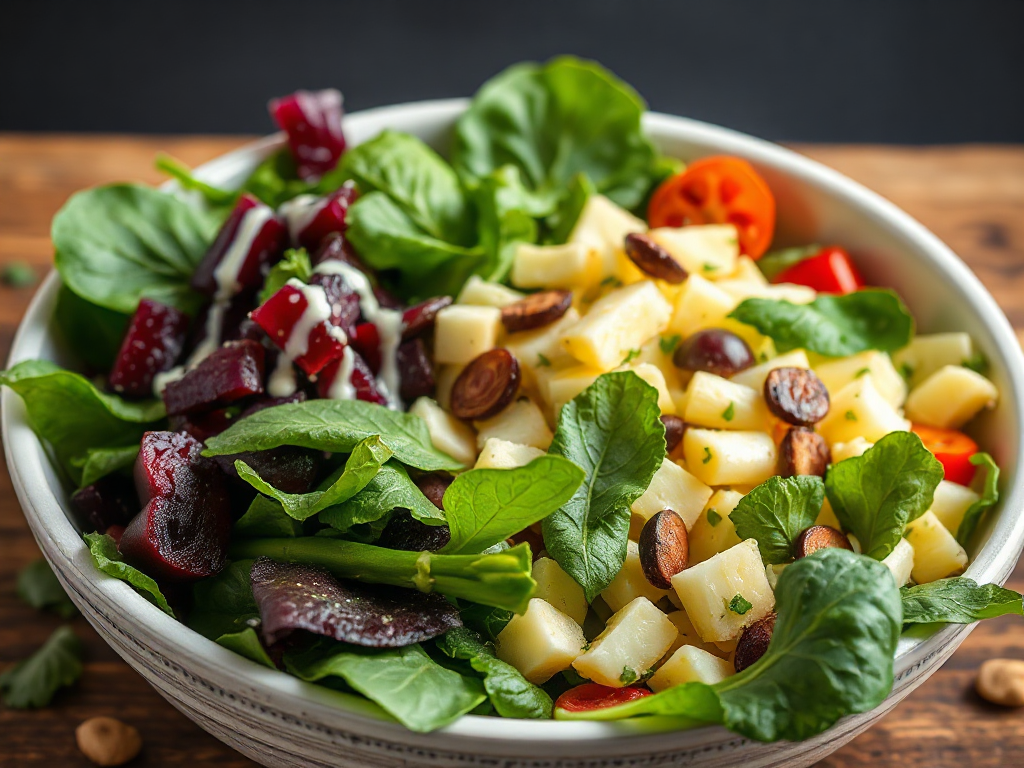
The best organic vegetables for folate-rich salads are spinach, romaine, arugula, asparagus, broccoli, Brussels sprouts, and beets, with leafy greens providing the strongest foundation. Raw greens preserve folate, while lightly steamed asparagus or broccoli can add variety without excessive water exposure or prolonged heat. Combine several vegetables rather than relying on one, because serving size, freshness, storage, and preparation affect the folate contribution. Organic certification may reduce exposure to certain agricultural chemicals, but it does not automatically make a vegetable higher in folate. Wash produce under running water, refrigerate it promptly, and pair the salad with beans, avocado, or citrus for a more substantial meal.
Which Vegetables Bring the Most Folate to a Salad?
Leafy greens should form the base of a folate-rich salad because spinach, romaine lettuce, and arugula provide more nutritional value per practical salad portion than watery greens such as iceberg lettuce. Spinach is especially useful for a nutrient-dense bowl, while romaine offers crunch and a milder flavor. Arugula contributes a peppery taste that can make a simple salad more satisfying without relying on a heavy dressing.
Other strong choices include asparagus, broccoli, Brussels sprouts, and beets. Asparagus can be shaved into ribbons or cut into thin pieces, broccoli adds texture and fiber, and finely sliced Brussels sprouts remain crisp while carrying a hearty flavor. Beets contribute color and can make a salad feel more substantial, although their folate contribution should be considered alongside their flavor and texture rather than treated as a replacement for leafy greens.
Variety matters because each vegetable brings a different balance of water, fiber, texture, and flavor. A large bowl made only from spinach may become wilted and monotonous, whereas a combination of romaine, spinach, shaved Brussels sprouts, asparagus, and red bell pepper is easier to eat regularly. Bell pepper is not a leading folate source, but its vitamin C and sweetness can improve the meal’s overall appeal.
A practical starting formula is two parts leafy greens to one part cruciferous or firm vegetables. Add a smaller portion of a colorful vegetable such as beets, carrots, or peppers. The common mistake is ranking vegetables solely by a nutrient chart while ignoring the amount actually eaten. A modest serving of a vegetable used consistently may be more useful in daily meals than an especially nutrient-dense ingredient that gets discarded because the salad is bitter, soggy, or difficult to prepare. For more ideas, compare combinations in best organic vegetables for folate rich salads rather than treating one item as a complete answer.
Raw, Cooked, and Stored: Protecting Folate in Practice
Raw preparation is convenient for many folate-rich salad vegetables, but raw is not automatically the best choice for every ingredient. Washing, cutting, storage, and heat exposure all influence quality. Folate is water-soluble, so prolonged boiling can move some of it into cooking water that is later discarded. Long cooking can also soften vegetables past the texture that makes a salad appealing.
Leafy greens are usually easiest to use raw. Dry them thoroughly after washing, because excess water speeds wilting and dilutes dressing. Asparagus and broccoli can be eaten raw when thinly sliced, but brief steaming or blanching may make them easier to chew. Cool them quickly after cooking and add them only when they are no longer hot; warm vegetables can wilt delicate spinach and romaine.
Brussels sprouts are a useful example of a compromise. Thin raw shavings provide crunch and require no cooking, while lightly steamed or roasted pieces offer a milder flavor. Roasting may improve palatability but can create dry edges and reduce the fresh character of the salad. Choose the method that helps you eat an appropriate portion consistently, while avoiding prolonged cooking in a large volume of water.
Freshness also affects practical value. Greens kept too long may lose texture before they are used, and pre-cut vegetables have more exposed surface area than whole produce. Store leafy greens cold in a breathable container with a clean towel to absorb excess moisture. Wash according to food-safety guidance and follow package instructions for ready-to-eat products rather than assuming that a “prewashed” label means storage conditions no longer matter.
A useful preparation sequence is simple:
- Wash produce under running water and remove damaged leaves or bruised sections.
- Dry greens well before storing or dressing them.
- Use raw greens for convenience and lightly cook firm vegetables when texture or flavor is a barrier.
- Dress the salad shortly before eating to reduce wilting.
The weak assumption to avoid is that uncooked vegetables always preserve every nutrient better. Preparation that makes a salad enjoyable, safe, and likely to be eaten can outweigh a theoretical advantage from keeping every ingredient raw.
How to Build a Balanced Folate-Rich Salad
A folate-focused salad becomes more useful as a meal when vegetables are combined with a protein source, a satisfying fat, and a flavorful dressing. Vegetables supply folate, fiber, and a range of plant compounds, but a bowl made only from greens may leave some people hungry soon afterward. Beans, lentils, eggs, tofu, or another suitable protein can turn the salad into a more complete lunch.
Start with a base of spinach, romaine, or a mixture of both. Add one firm vegetable for texture, such as shaved Brussels sprouts or broccoli, then include asparagus or beets according to season and preference. Avocado, olive oil-based dressing, seeds, or nuts can provide richness. These ingredients do not make folate absorb directly through a special mechanism, but they may improve satisfaction and make a nutrient-dense meal easier to maintain.
Acidic ingredients such as lemon juice, vinegar, or citrus segments can brighten bitter greens. Citrus and bell peppers also add vitamin C, while beans increase fiber and protein. The practical advantage is culinary as much as nutritional: a salad with contrasting flavors is less likely to depend on excessive salt, sweet dressing, or processed toppings.
Consider two common scenarios. Someone preparing lunch at work may do best with washed romaine, baby spinach, canned no-salt-added beans, and a separate dressing container. Someone cooking for a family may use a romaine base with lightly steamed broccoli and asparagus, then let each person add beets, seeds, or beans. The first approach prioritizes speed; the second prioritizes flexibility. Neither needs to imitate a restaurant salad to be effective.
Use this compact priority order when assembling the bowl:
- Choose the base: make leafy greens the largest vegetable component.
- Add contrast: include one crisp or lightly cooked vegetable.
- Make it filling: add beans, lentils, tofu, eggs, nuts, or seeds as appropriate.
- Finish with flavor: use an acid, herbs, and a measured dressing.
Relying on a single “superfood” is a common failure mode. A salad built around spinach but lacking protein may be technically nutrient-focused yet inconvenient and unsatisfying. A mixed bowl that fits the eater’s schedule is usually the more durable choice. For a broader ingredient comparison, use best organic vegetables for folate rich salads as a planning reference, not as a reason to buy every listed vegetable at once.
Organic Buying, Washing, and Food-Safety Decisions
Organic certification describes how produce is grown and handled under applicable organic standards; it does not guarantee that a vegetable contains more folate. Folate levels can vary with plant variety, maturity, growing conditions, storage, and preparation. Choose organic when it fits your environmental, farming, or purchasing priorities, but keep the nutritional goal separate from the label.
Budget and availability may change the sensible choice. Organic spinach may be affordable in one store and expensive in another, while conventional romaine or frozen broccoli may be more accessible. A mixed purchasing strategy can preserve the habit of eating vegetables without treating the organic label as the only measure of quality. Frozen vegetables can be practical for cooked additions, although they are not always suitable for a crisp raw salad.
Food safety deserves equal attention. Rinse fresh produce under running water, rub firm surfaces gently, and use a clean cutting board. Do not use soap or household cleaners on vegetables. Separate produce from raw meat, poultry, and seafood, and refrigerate prepared salad promptly. Damaged or slimy leaves should be discarded rather than rescued by adding more dressing.
Prewashed greens offer convenience, but convenience does not remove the need to observe the use-by date, keep the package cold, and avoid cross-contamination. A home-prepared salad can fail because the ingredients were left warm in a lunch bag, not because the vegetables were organic or conventional. An insulated lunch container and a separate dressing jar may do more for the meal’s quality than changing from one label category to another.
Prioritize in this order: produce you will eat, safe handling, freshness, variety, and then the purchasing attributes that matter to your household. Organic vegetables can fit comfortably within that order. The mistake is postponing salads indefinitely while searching for perfect produce or assuming organic status compensates for poor storage and handling.
Common Salad Mistakes and Better Alternatives
The most common mistake is confusing a nutrient-rich ingredient with a nutritionally complete meal. Spinach, romaine, and asparagus can supply valuable folate, but a bowl of vegetables alone may not provide enough energy or protein for a full meal. Add a practical protein source and enough dressing or another satisfying ingredient to match the eating occasion.
Another problem is excessive preparation. Buying spinach, arugula, broccoli, asparagus, Brussels sprouts, beets, and several toppings sounds varied, but unused produce can wilt before it reaches the bowl. Select two leafy greens and two additional vegetables for the week, then rotate them. For instance, spinach and romaine can pair with broccoli early in the week and shaved Brussels sprouts later. This approach limits waste while preserving variety.
Texture is another decision point. Wet greens, overcooked broccoli, and large hard pieces of raw asparagus make a salad less appealing. Dry greens thoroughly, slice firm vegetables thinly, and cool cooked additions before combining them. Keep dressing separate if the salad will sit for more than a short period. A working salad should remain crisp enough to eat without effort.
Do not assume that more dressing makes a salad healthier or less healthy in every circumstance. A small amount of flavorful dressing can help someone eat more vegetables, while an oversized serving may add more energy than expected. Measure once or use a small container until you can estimate portions comfortably.
All in all, folate-rich salads should not be presented as treatment for a deficiency or substitute for individualized medical advice. People with diagnosed deficiencies, pregnancy-related nutrition questions, medication concerns, or conditions affecting nutrient needs should consult a qualified clinician. For general meal planning, the useful test is straightforward: the salad is working when it is fresh, varied, filling enough, safe to store, and easy to repeat.
Frequently Asked Questions
Which leafy green is best for a folate-rich salad?
Spinach is a strong choice, while romaine and arugula add useful variety, texture, and flavor. Combining greens is more practical than relying on one exclusively.
Does organic produce contain more folate?
Organic status does not automatically mean higher folate. Variety, freshness, growing conditions, storage, and preparation can influence nutrient content.
Can broccoli and asparagus be eaten raw in a salad?
Yes, when sliced thinly and handled safely. Brief steaming or blanching may improve texture and flavor for people who find raw pieces too firm.
How can I keep leafy greens from becoming soggy?
Dry them thoroughly after washing, refrigerate them promptly, and add dressing shortly before eating. Store dressing separately for packed lunches.
What should be added to make the salad a full meal?
Beans, lentils, tofu, eggs, nuts, or seeds can add protein and staying power. Choose the option that fits your dietary needs and preparation time.
Conclusion
A dependable folate-rich salad starts with leafy greens, then becomes more useful through thoughtful additions. Use spinach, romaine, or arugula as the foundation; add broccoli, asparagus, shaved Brussels sprouts, or beets for texture and variety; and include a protein source when the salad replaces a meal. Raw preparation works well for greens, while brief cooking can make firm vegetables easier to enjoy. Organic purchasing is a valid personal priority, but it should not overshadow freshness, safe handling, affordability, or the likelihood that the produce will actually be eaten. Plan a small rotation, dry greens carefully, keep dressing separate when needed, and seek individualized clinical advice for diagnosed nutrient concerns.